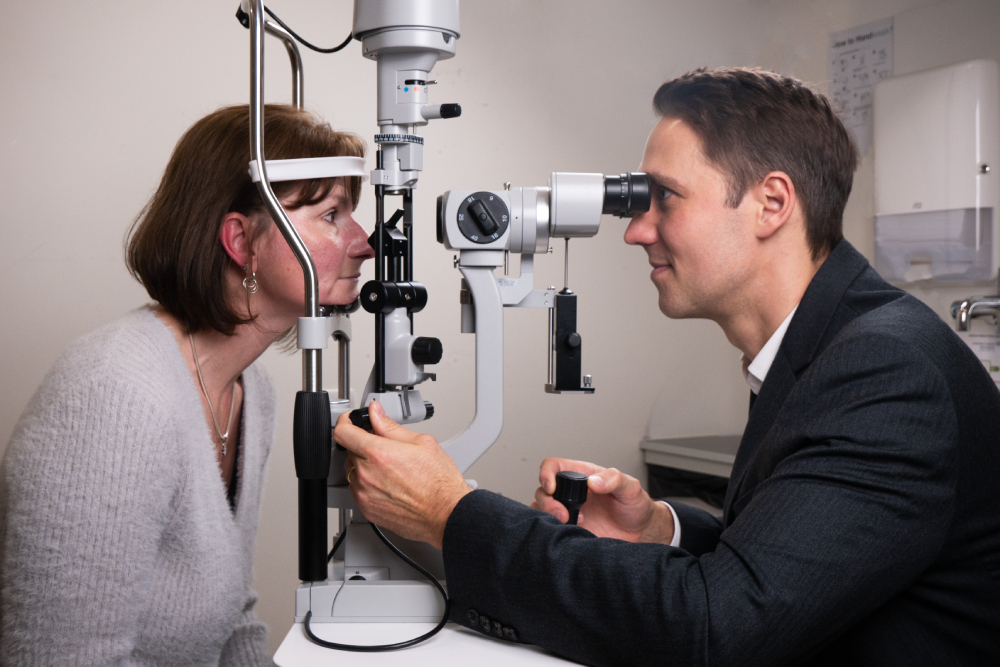

Refractive Lens Exchange
Refractive Lens Exchange (RLE), also called lens replacement surgery, is a procedure where the eye’s natural lens is removed and replaced with an artificial intraocular lens (IOL) to correct refractive errors (e.g., nearsightedness, farsightedness, astigmatism, or presbyopia) and reduce dependence on glasses or contact lenses. It is similar to cataract surgery but performed for vision correction rather than for cataract removal.
Indications:
- Patients seeking reduced reliance on glasses or contacts, especially those at risk for future cataracts.
- Moderate to high refractive errors (including those that are unsuitable for laser refractive surgery such as eyes with thin corneas or extreme prescriptions).
- Presbyopia (age-related near vision loss) in patients over 45–50.
- Not ideal for younger patients with healthy lenses due to accommodation loss.
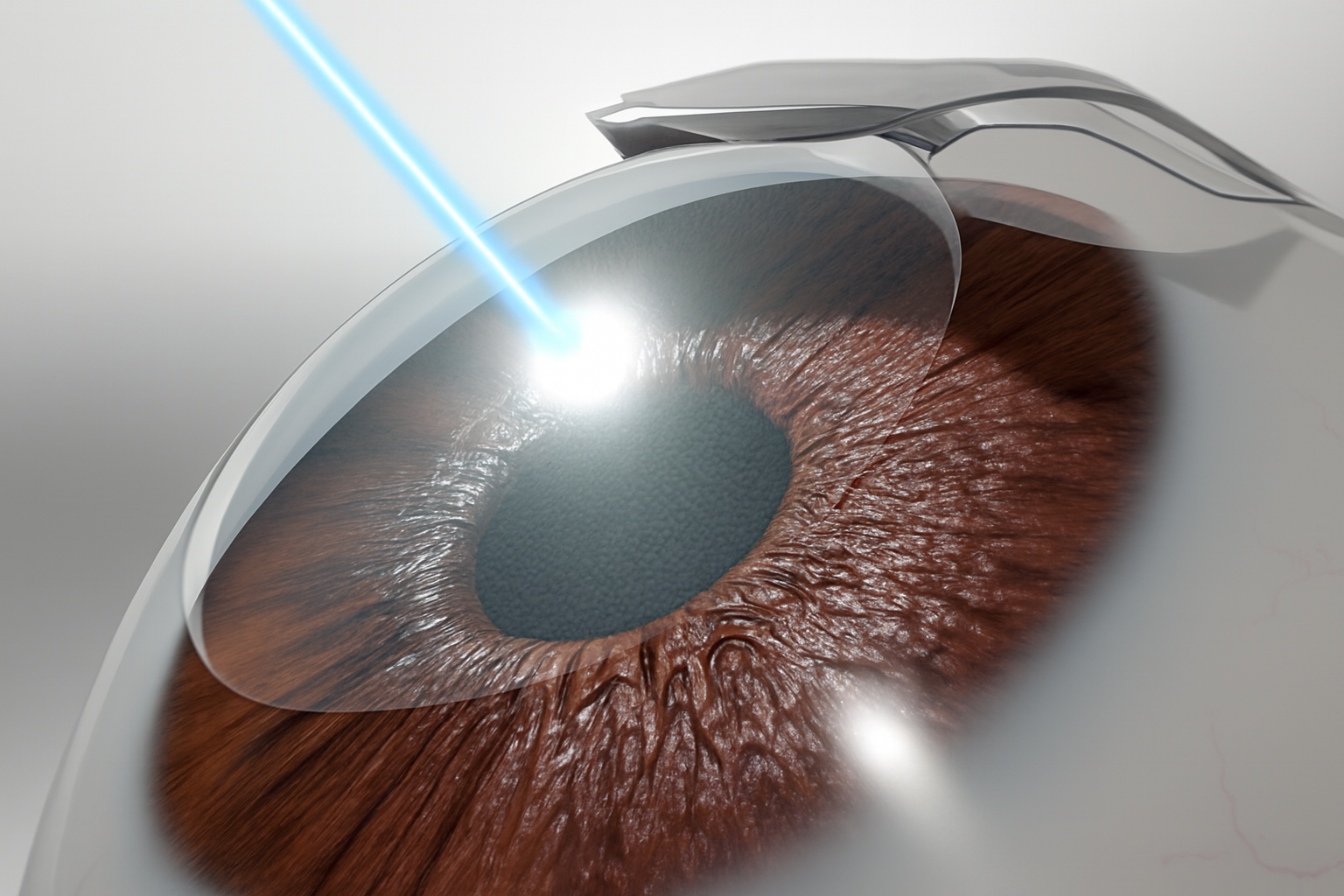

Effectiveness
- 99% success rate for improving vision and reducing glasses use.
- Eliminates future cataract risk since the natural lens is removed.
Procedure:
The procedure for refractive lens exchange is identical to standard cataract surgery.
Pre-operatively:
The nursing staff will dilate your eye by placing a tiny little tablet underneath your lower eyelid. This gives the best chance of dilating you pupil nicely for the operation. You will also be offered a relaxing medication (Diazepam) to help relieve any natural anxiety. Mr Leadbetter will come to see you and answer any questions you might have on the day.
In the operating theatre:
Anaesthetic: Mr Leadbetter performs the vast majority of cataract surgery with topical and intracameral anaesthetic. This involves numbing drops, and more numbing medicine into the front chamber of the eye at the very beginning of the surgery. This avoids an injection, and the eye settles very quickly following this type of anaesthetic. You will not feel anything sharp or uncomfortable, though you will still be able to feel pressure and cold.
It is possible to be put to sleep for the operation with a general anaesthetic, though this is rarely necessary.
Procedure: You will generally be in the operating theatre for around 30 minutes. We perform various safety checks before proceeding with the surgery. You will be laid down on a highly adjustable bed, and we will ensure you are completely comfortable before starting. If having topical anaesthetic, you will need to look up into the bright light of the operating microscope. Though very bright at first, you will get used to this quickly. You will not see instruments coming in and out of the eye.
A microincision is made, the natural lens is broken up with ultrasound and removed, and an IOL is implanted. The procedure normally takes 10-15 minutes per eye. Normally, one eye will be done first, with the second eye at a later date.
Recovery:
Patients go home the same day. Vision often improves within days, with full recovery in around 4 weeks. Anti-inflammatory drops are used for 4 weeks.
Risks:
- 1 in 500 chance of a permanent, serious loss of vision (higher risk than standard cataract surgery)
- 1 in 30 chance of a more minor problem that would require further treatment. This is more commonly extended drop treatment, though other operations are more rarely required.
- 1 in 500 chance of retinal detachment (higher risk than standard cataract surgery), which would need urgent surgery to treat.
- 1 in 100 risk of damaging the lens capsule, which lengthens the operation and post operative course. This can mean only a monofocal lens can be placed, increasing the need for spectacles after the operation.
- 1 in 4 chance of clouding of the lens capsule after the operation (posterior capsule opacification) that can be treated with a quick, painless and safe laser treatment.
- Glare, halos, or reduced contrast sensitivity, especially with multifocal IOLs.
- Loss of accommodation in younger patients, requiring reading glasses for some tasks.
Post-Procedure Care:
- Wear an eye shield for the first few hours after surgery, and overnight for 1 week.
- Avoid rubbing the eye, heavy lifting, or strenuous activity for 1–2 weeks.
- All activities can resume after 4 weeks.
- Follow-up check at 1-4 weeks after surgery.
- New glasses may be prescribed after 4 weeks if needed.
Further information: https://share.google/upHa5RmF6EqKnDkvw
Discussion with Duncan is important to answer any questions that you may have. For information about any additional conditions not featured within the site, please contact us for more information.